


The Fibula: How One Ancient Brooch Became the Soul of Amazigh Identity
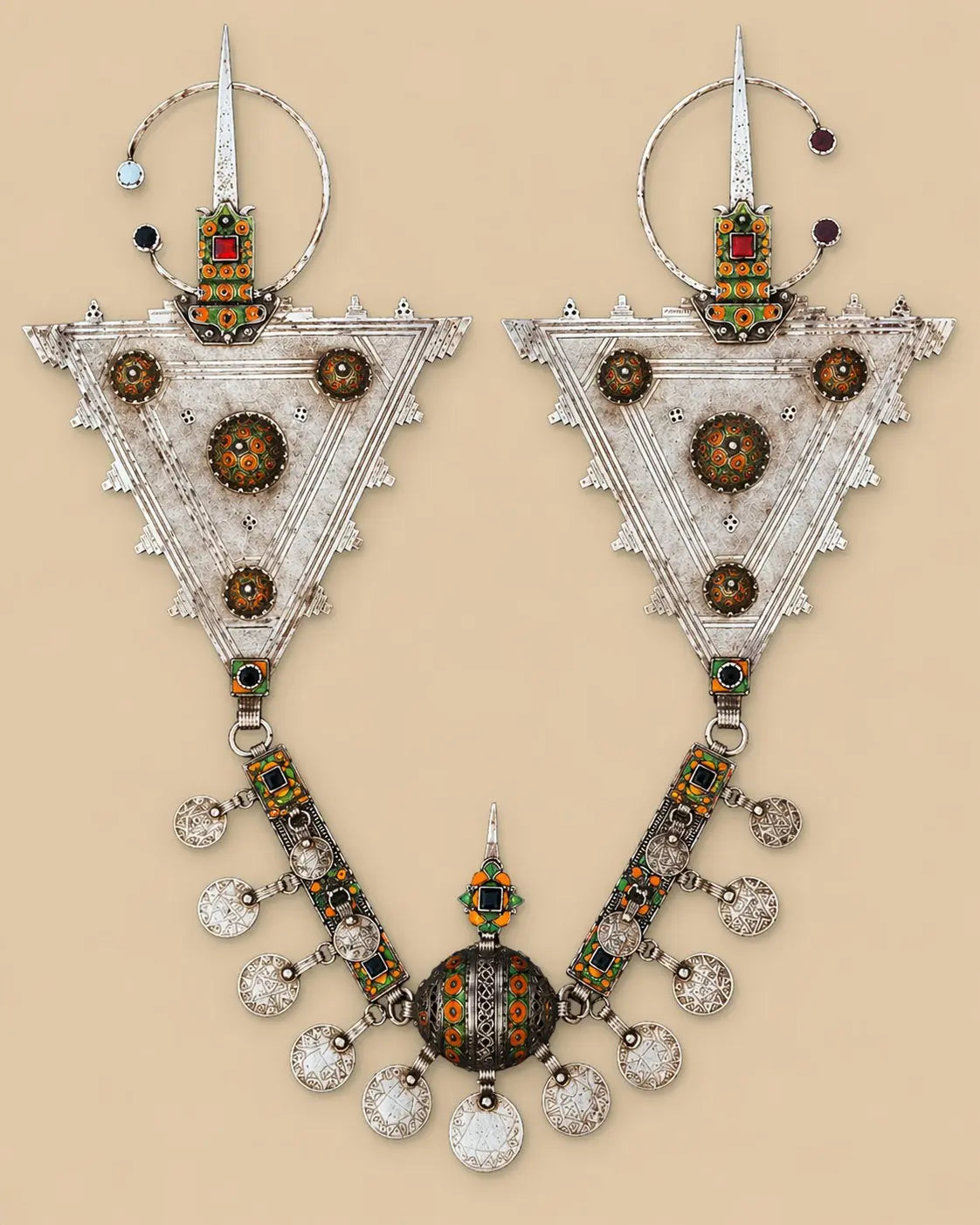
It is triangular. It is silver. And for thousands of years, it has been fastening the garments of Amazigh women across North Africa, not just as a clasp, but as a statement. A statement of who she is, where she comes from, and whether her heart belongs to another. The Fibula, the Tazerzit, is not merely a piece of jewellery. It is the most intimate form of self-expression a woman can wear.
Walk through the souks of Tiznit, the mountain villages of the Atlas, or the windswept valleys of the Draa, and you will see it. Sometimes worn in pairs on the shoulders, holding a flowing length of fabric in place. Sometimes hanging at the chest, heavy with silver and coral. Sometimes reduced to a single, delicate pendant, a nod to an ancient form that has travelled through time and arrived, still alive, in the twenty-first century. The Amazigh fibula is everywhere. And yet, most people who see it do not know what it carries.
What Is a Fibula, and Where Does It Come From?
The word fibula comes from Latin, the Romans used it to describe a type of brooch that fastened their togas. But the Amazigh version predates the Roman presence in North Africa by centuries. Archaeological evidence places early fibula-like clasps in the region as far back as the first millennium BCE, found in burial sites alongside pottery, beads, and other objects of personal significance.
In the Tamazight language of the Chleuh people of southern Morocco, it is called tazerzit, a word that is grammatically feminine, like all Tamazight words beginning with t. Linguists believe it derives from azar, meaning "hair", because the fibula was not only worn as a clasp but was often woven directly into a woman's braids, sitting at the junction between the body and the cloth that covered it.
In the Rif mountains of northern Morocco and among many speakers of other Amazigh dialects, the brooch is called tisighnast, derived from a root meaning "to pin" or "to secure." But whether tazerzit or tisighnast, the object performs the same role: it holds things together. Literally and symbolically.
"The fibula was never just a fastening. It was the first thing another woman looked at when she approached you. It told her everything she needed to know, your tribe, your status, your availability, your wealth. In a world without written records, the jewellery was the document."
A Language Written in Silver
What makes the Amazigh fibula extraordinary is not its craftsmanship, though that is extraordinary, but its capacity to communicate. As we explore in our guide on Amazigh symbols, in a culture where most women were not literate in any written language, jewellery became a sophisticated visual code. Every choice : the size of the brooch, the region of its making, the way it was worn, conveyed information that the wearer controlled completely.
The most well-documented of these codes concerns marital status. A fibula worn on the right side of the chest signalled that a woman was unmarried. On the left side, it announced that her heart was taken. This was not superstition. It was practical social communication, a way for women to navigate public life on their own terms, without having to speak a word.
The Tazerzit : Key Facts
- Name : Tazerzit (Chleuh) · Tisighnast (Rif) · Fibule (French)
- Form : Triangle beneath a ring or semicircle, with a pin
- Material : Traditionally silver, often set with coral, amber or enamel
- Worn : In pairs on the shoulders, singly at the chest, or as a pendant
- Right side : The wearer is unmarried
- Left side : The wearer is married, her heart is taken
- Size : Larger fibulas historically indicated higher social status
- Region : Varies by tribe, each region has its own distinctive form
The size of the fibula also spoke. A large, heavy brooch set with coral and amber announced wealth, influence, and social standing. A smaller, simpler piece might indicate a younger woman, or one from a more modest family. But regardless of size, the brooch was always made with care — because in Amazigh culture, a woman's jewellery was not a luxury. It was her portable wealth, her inheritance, her security.
The Art of Making One
In the silver workshops of Tiznit, the jewellery capital of southern Morocco, where the tradition of Amazigh silversmithing is most alive today, master artisans still produce fibulas using techniques that are centuries old. The process begins with raw silver, which is melted, drawn into wire, hammered into sheets, and worked by hand over hours of patient, meticulous labour.
The triangular body of the fibula is the starting point. Into this form, the artisan etches geometric patterns, lines, chevrons, diamonds, each one a deliberate choice carrying its own symbolism. The pin is forged separately and joined to the body with skill that requires years of practice to master. When coral or amber is added, the stones are set by hand, one by one.
What is remarkable is that each region of the Amazigh world developed its own version of the fibula. As we celebrate throughout our Glamazigh Journal, these regional techniques transformed silver into a living canvas — from the heavy, deeply geometric fibulas forged in Tiznit to the delicate enamel brooches of Kabylie in Algeria and the linear silver of the Rif mountains. Reading a fibula, a knowledgeable Amazigh woman could tell you not only the status of the wearer but the exact mountain range she called home, turning these ancestral adornments into wearable pieces of history.
"To forge a fibula is to forge a relationship, between the artisan's hands and the culture they carry, between the silver and the woman who will wear it, between the past and the person walking into the future."
The Fibula Today : Between Loss and Renaissance
The twentieth century was not kind to traditional Amazigh jewellery. Urbanisation, the influence of gold over silver, and the slow erosion of rural customs meant that the fibula retreated from everyday life into the space of celebrations and museums. Older women who once wore their brooches to the market began to associate them with a past they wanted to leave behind, with the poverty and isolation of the mountains, rather than the pride and richness of a culture.
But something is shifting. Among a new generation of Amazigh women, educated, connected, and fiercely proud of their heritage, the fibula is returning. Not as a historical relic, but as a living symbol of who they choose to be. It is being reimagined in contemporary jewellery, worn as a pendant rather than a garment fastening, incorporated into modern designs that carry the triangular form into new contexts.
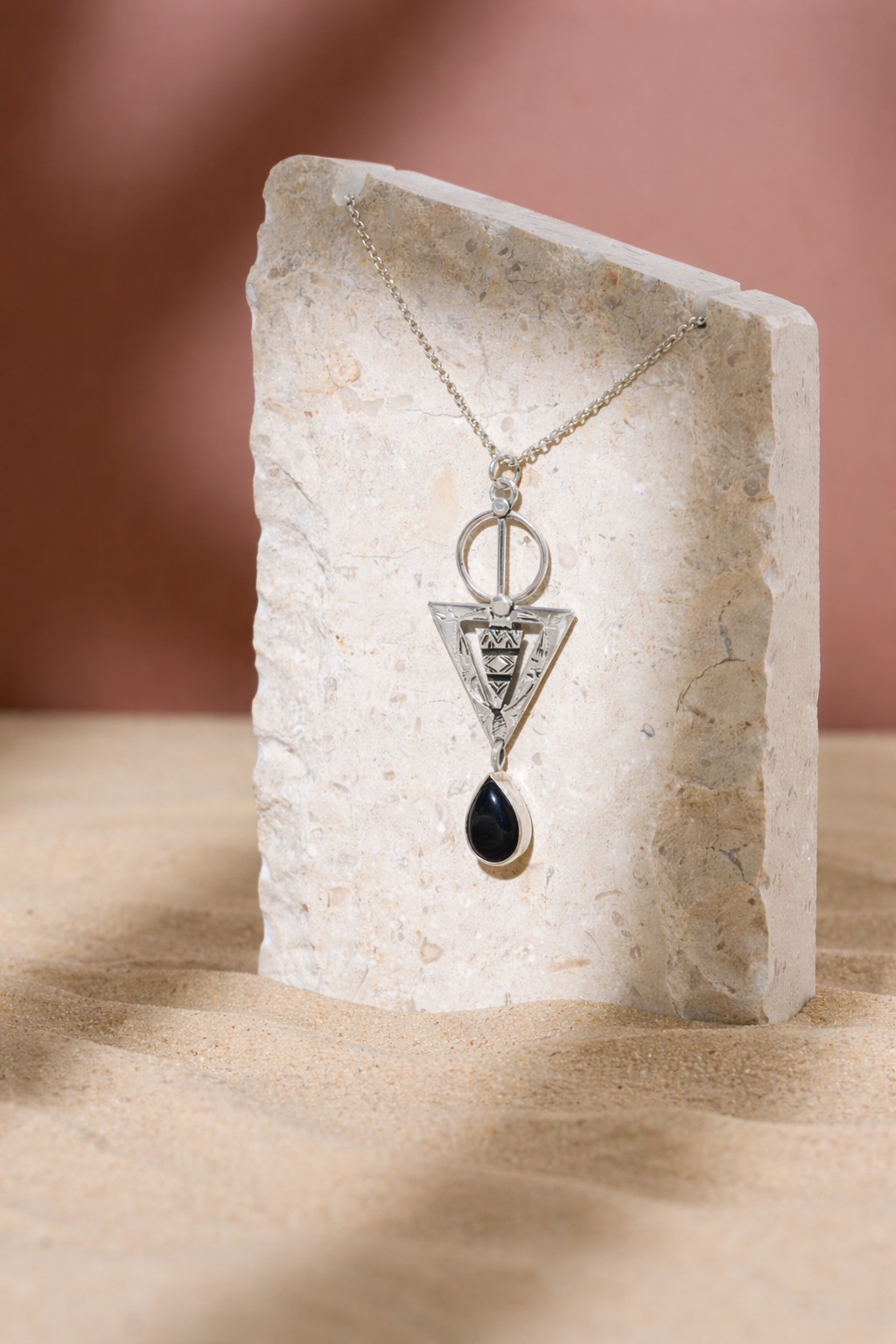
This is precisely where Glamazigh sits. The Maisa necklace our fibula-inspired pendant, available in red, green and now black, takes the ancient triangular form of the Tazerzit and brings it into the present. It is made not from hand-forged silver but from gold-tone stainless steel, which makes it accessible to a generation that loves the symbol but lives a modern life. The meaning is unchanged. The form adapts. The culture continues.
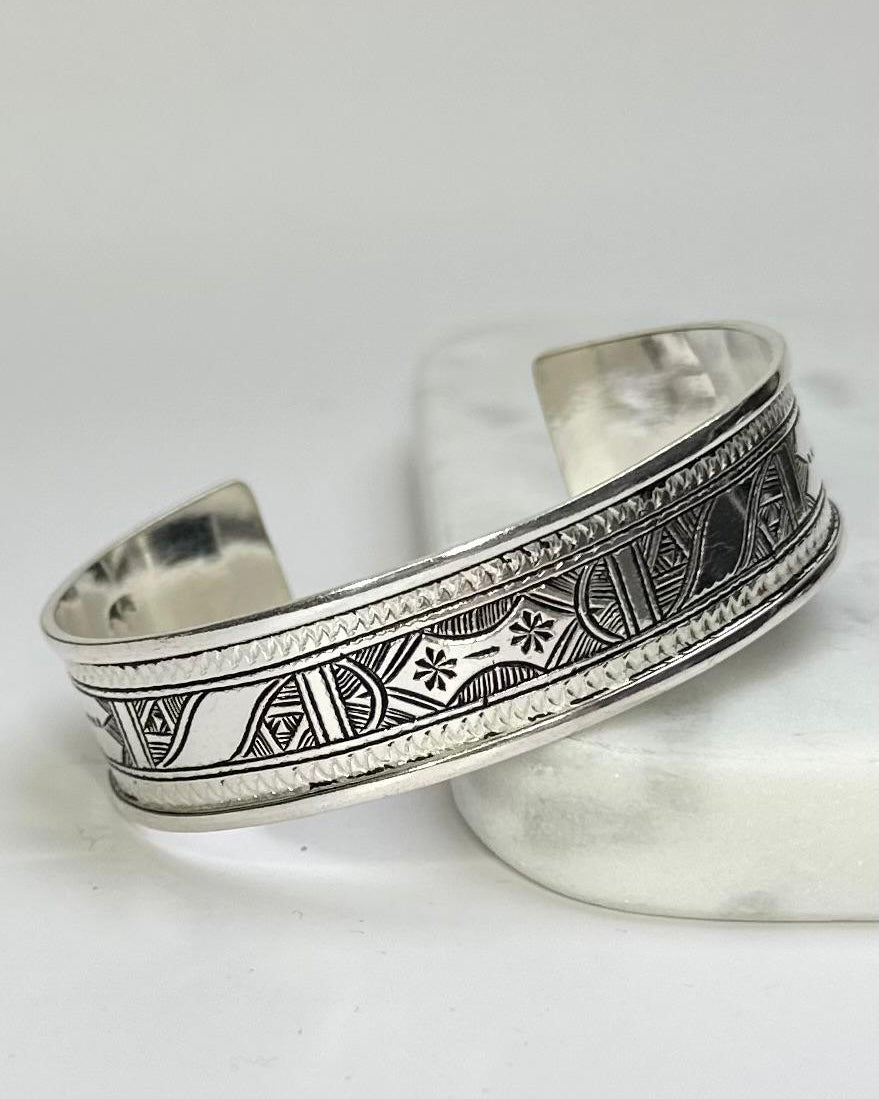
You can discover this ancestral lineage woven into our Tisegnas pendant. We also celebrate this timeless triangular motif through casual everyday accents like our cord bracelet, statement fibula earrings, and the classic Lujain broche, translating historic symbols into effortless daily wear.
"The fibula does not belong to the past. It belongs to every Amazigh woman who chooses to say, clearly and without apology: I know who I am."
How to Wear the Fibula Today
Wear it alone The fibula is a statement piece by nature. On a simple outfit, a white shirt, a blazer, a plain dress, a fibula pendant does what it has always done: it draws the eye and opens a conversation. Let it speak on its own.
Layer it with the Yaz The Yaz pendant and the Tazerzit fibula together create a complete Amazigh identity story, the symbol of the free man alongside the emblem of feminine strength. Layer them at different lengths for a look that is both modern and deeply rooted.
Wear it on the left or the right If you know the tradition, wear it on the left to honour those who came before you. Or on the right, as a quiet declaration that you are your own person, still becoming. The code is yours to use.