



AMAZIGH SYMBOLS AND THEIR MEANING
Every Glamazigh piece carries a symbol, and every symbol a meaning. Discover the five Amazigh and Tuareg symbols at the heart of our collections, what they say, and the jewellery that brings them to life. Choose the one that speaks for you.
By Myriam, founder of Glamazigh, with our partner artisans.
What each Amazigh symbol means
Each symbol has its own story and meaning. Discover what they say, then choose the one you'll wear.
Find your symbol
Every piece carries a meaning. Choose the one that speaks to you.
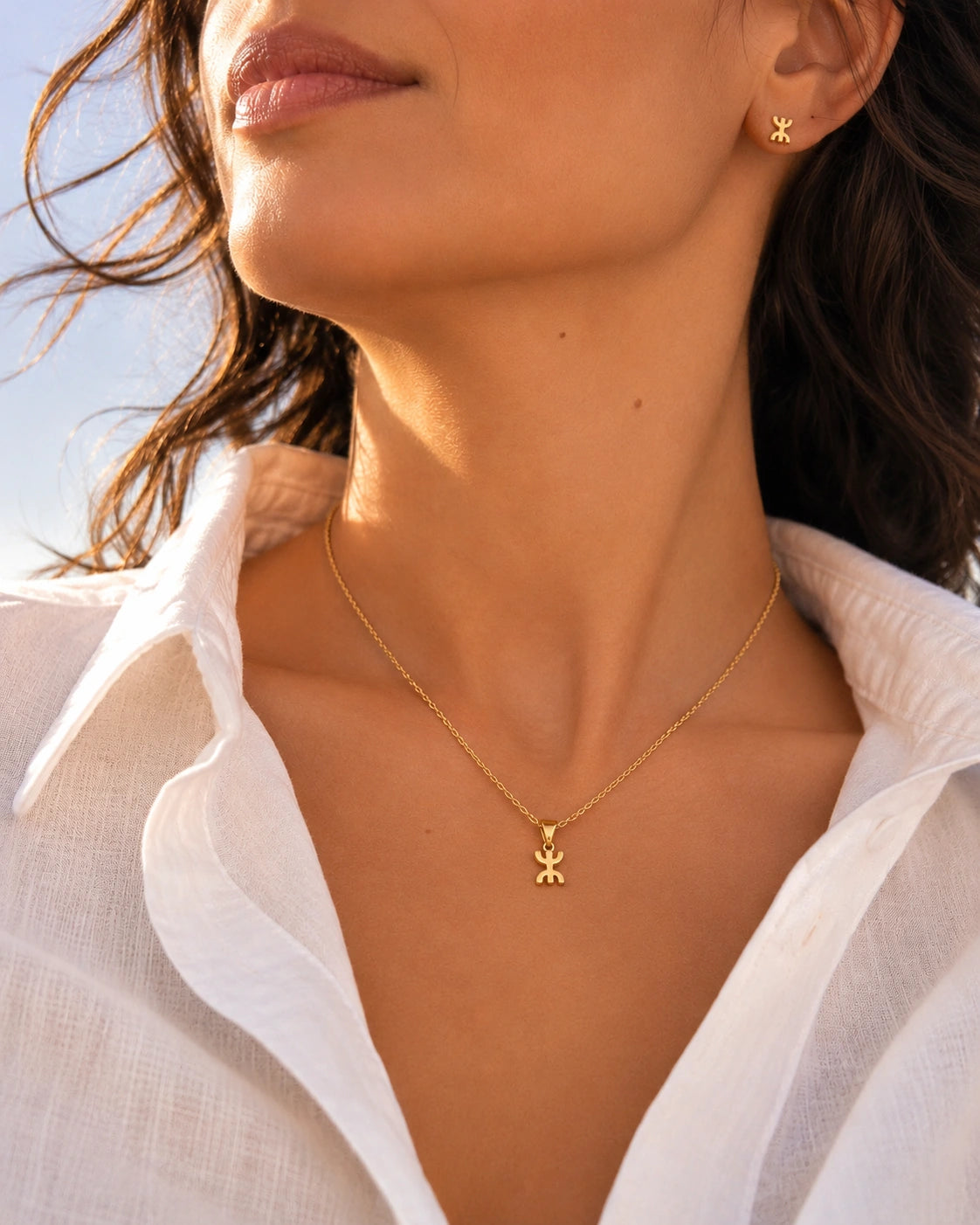
 Freedom · YazFor free spirits who write their own path.
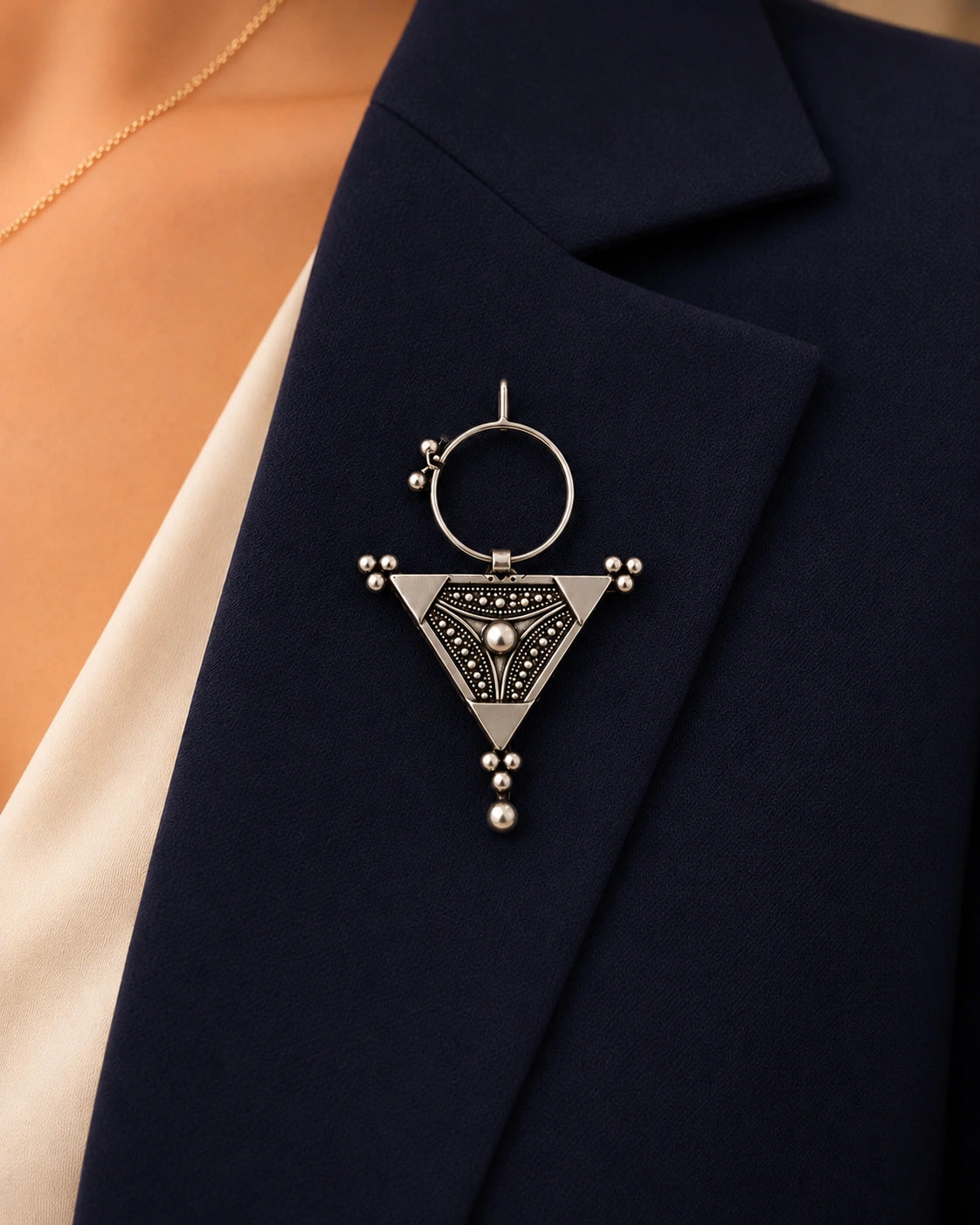
 Feminine strength · FibulaQuiet power, worn close to the heart.
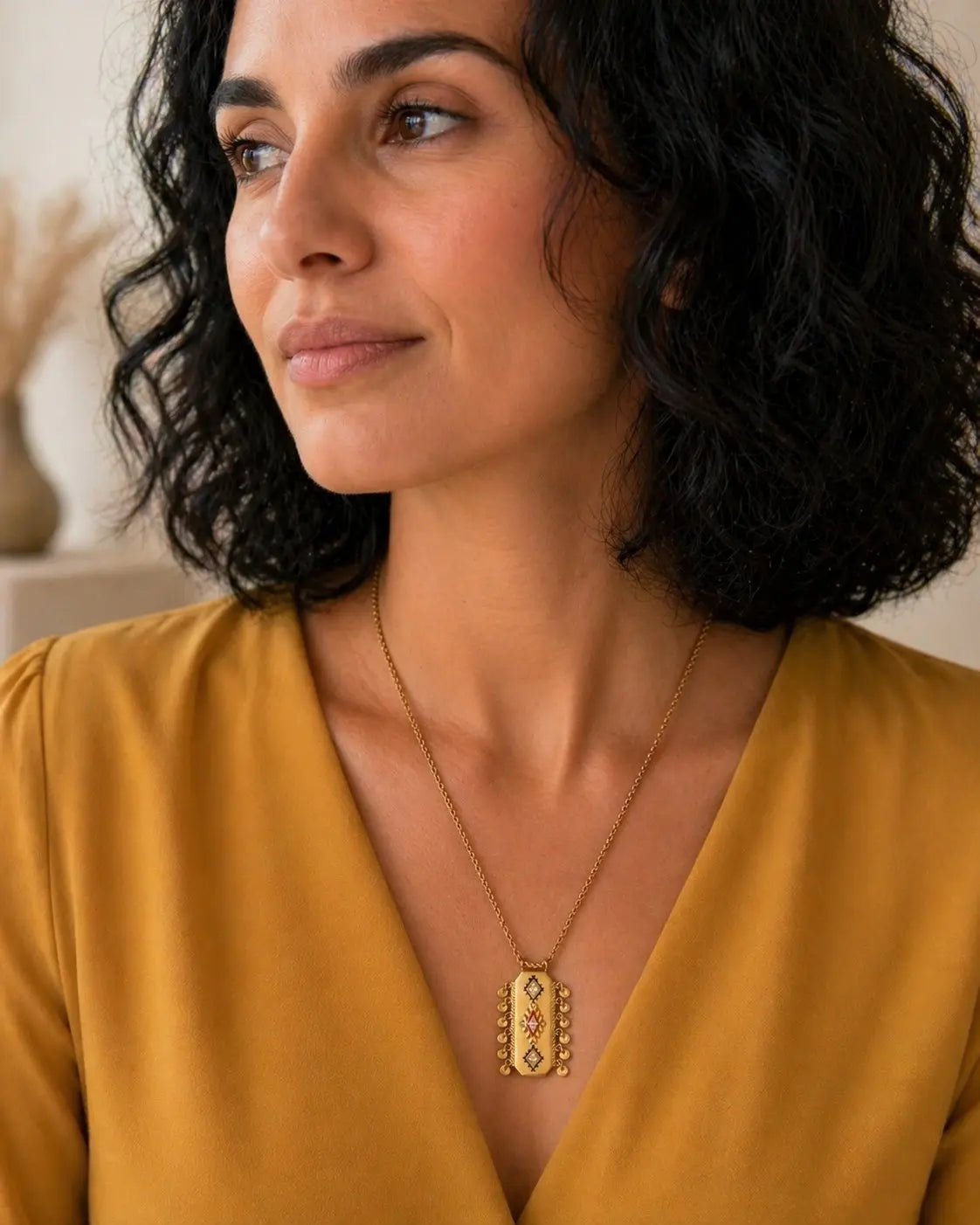
 Femininity · LozengeA tribute to womanhood and new beginnings.
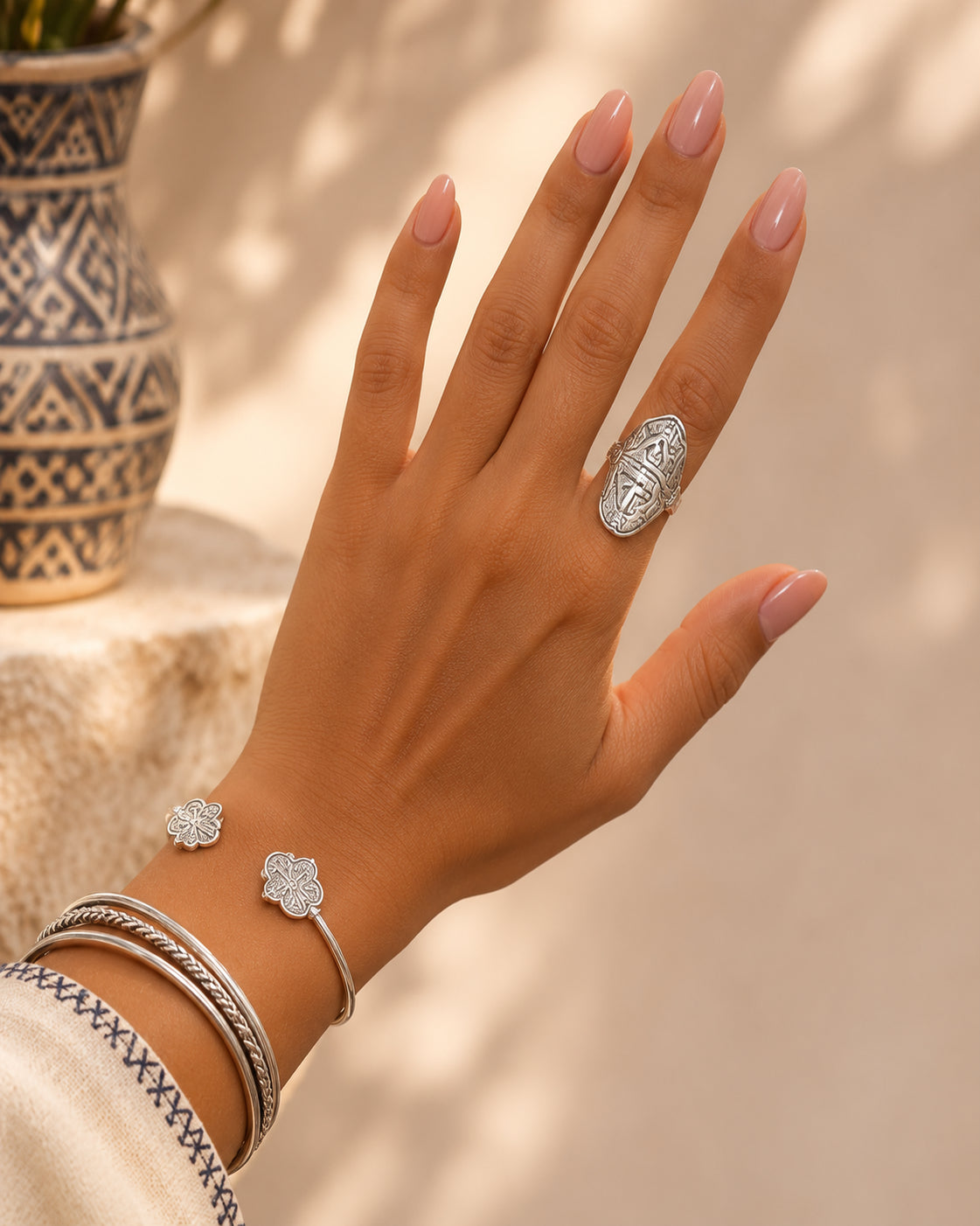
 Serenity · Hand of FatimaFor moving through life with a calm mind.
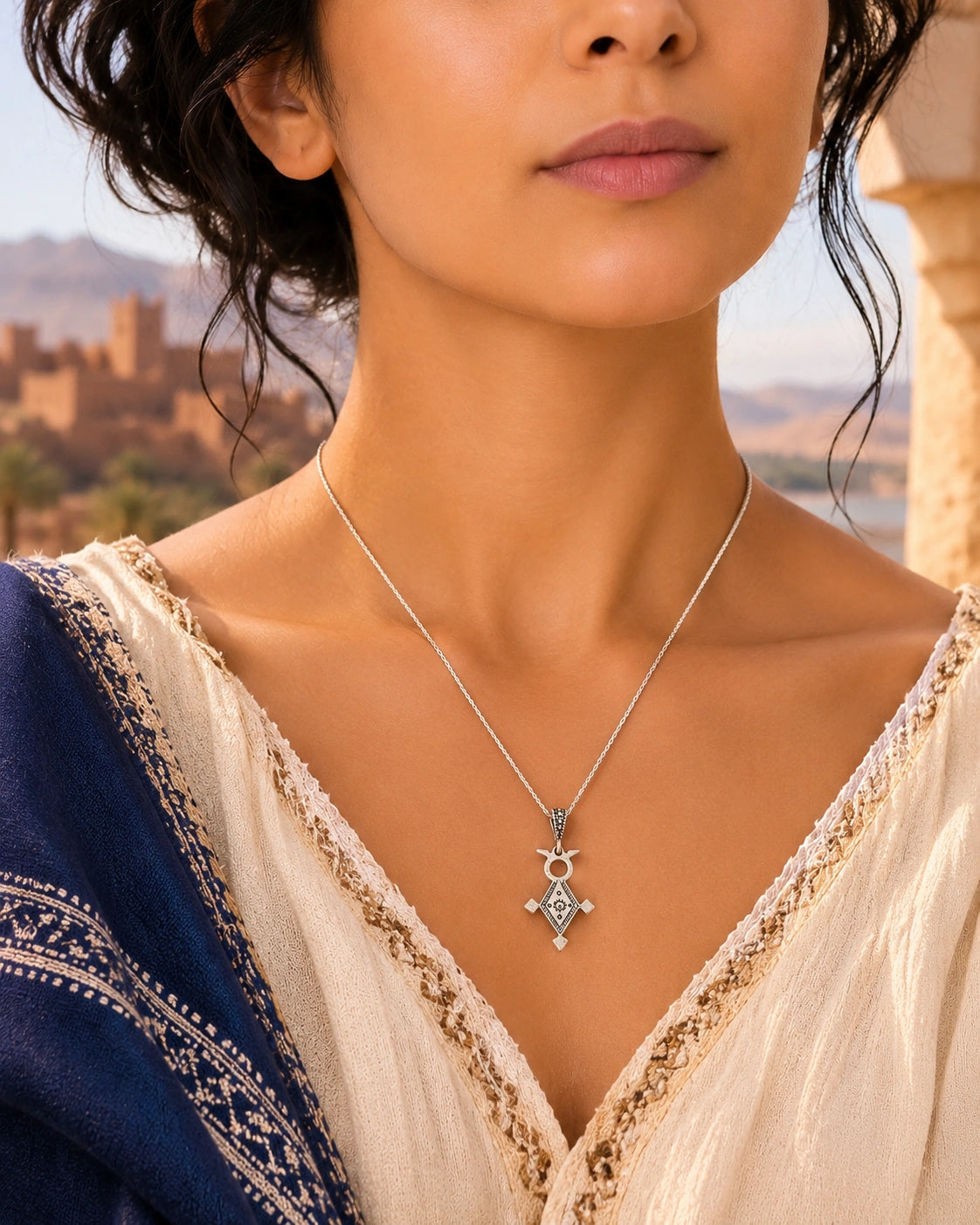
 Journey · Southern CrossFor travellers, dreamers and every new horizon.
Amazigh culture & symbols: go further
Where do the Yaz, the fibula and the Southern Cross come from? Explore the stories, history and meaning behind the Amazigh symbols that inspire our jewellery.
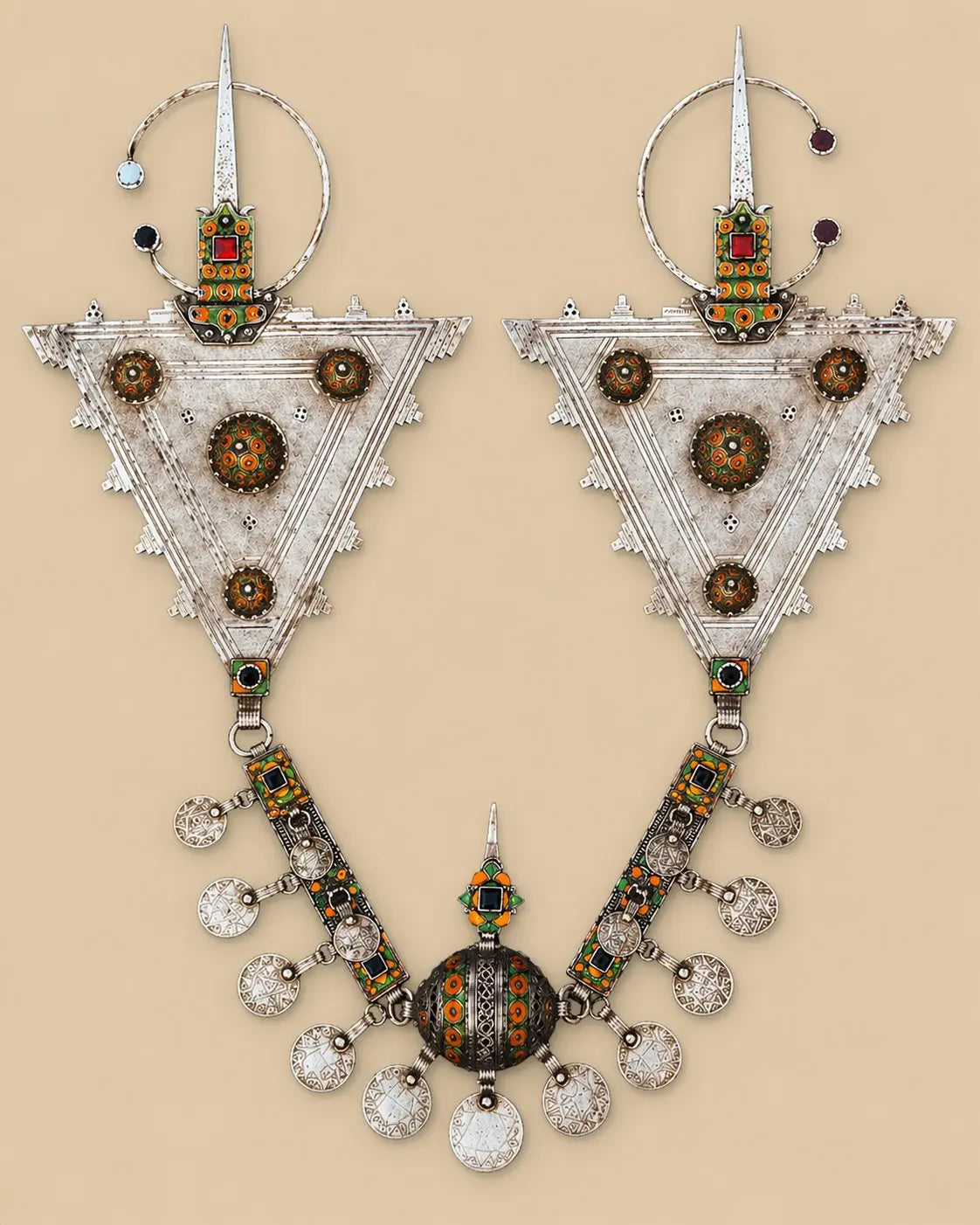
The Fibula: How One Ancient Brooch Became the Soul of Amazigh Identity
It is triangular. It is silver. And for thousands of years, it has been fastening the garments of Amazigh women across North Africa, not just as a clasp, but as a statement. A statement of who she ...
Read more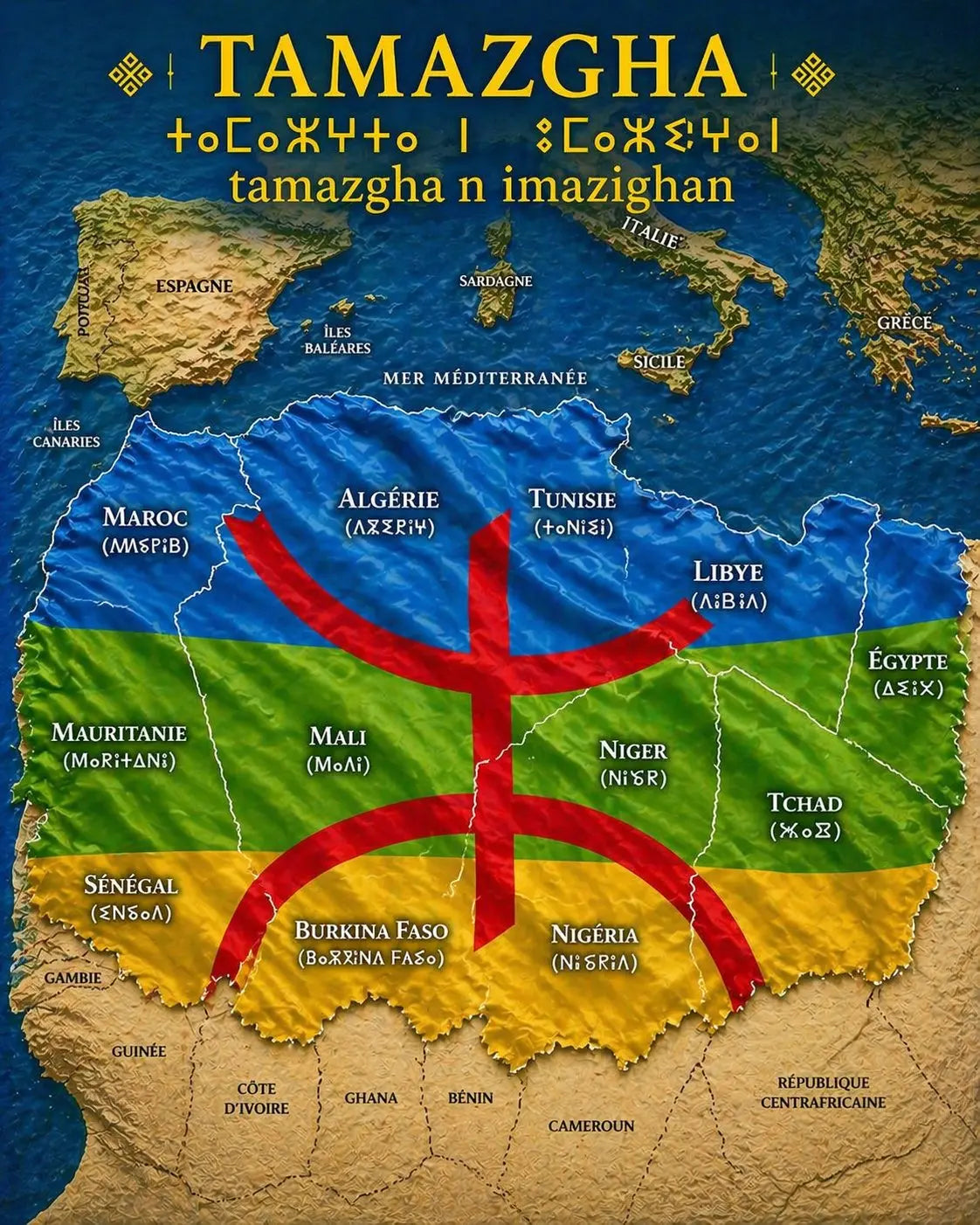
Who Are the Amazigh People (Imazighen)?
At Glamazigh, our jewellery is deeply inspired by the heritage of the Amazigh, also known as the Imazighen. To look at our handcrafted pieces is to appreciate a legacy, but to truly wear them, you ...
Read more
The Philosophy of Amazigh Symbols
At Glamazigh, every jewel carries a story, and that story begins with the Amazigh. To look at a piece of traditional jewellery from North Africa is to read a historical document. In a culture histo...
Read moreAmazigh symbols: your questions
Amazigh symbols form a shared visual language, found from the Moroccan Atlas to Kabylie in Algeria and the Tuareg Sahara, on tattoos, rugs, pottery, house walls and jewellery. The most widespread are: the Yaz ⵣ, a figure standing with arms raised, symbol of freedom; the lozenge, symbol of femininity and fertility, and also read as a protective eye, notably on Kabyle pottery; the triangle, linked to womanhood and the power to give life, and the shape of the fibula’s pendant; the eye motif, which wards off the evil eye; the fibula (tazerzit), symbol of feminine strength and transmission; and the Tuareg Southern Cross, symbol of the journey and the four directions. Meanings can vary from one region, community or artisan to another: these are their most common readings. Discover all our symbols.
Our Heritage pieces are handmade by partner Amazigh and Tuareg artisans, in silver, copper or brass, so each one carries small variations that make it unique. Our Modern collection, in 925 silver, gold plating and stainless steel, is not handmade: it reinterprets the same symbols for everyday wear. Discover the Heritage collection.
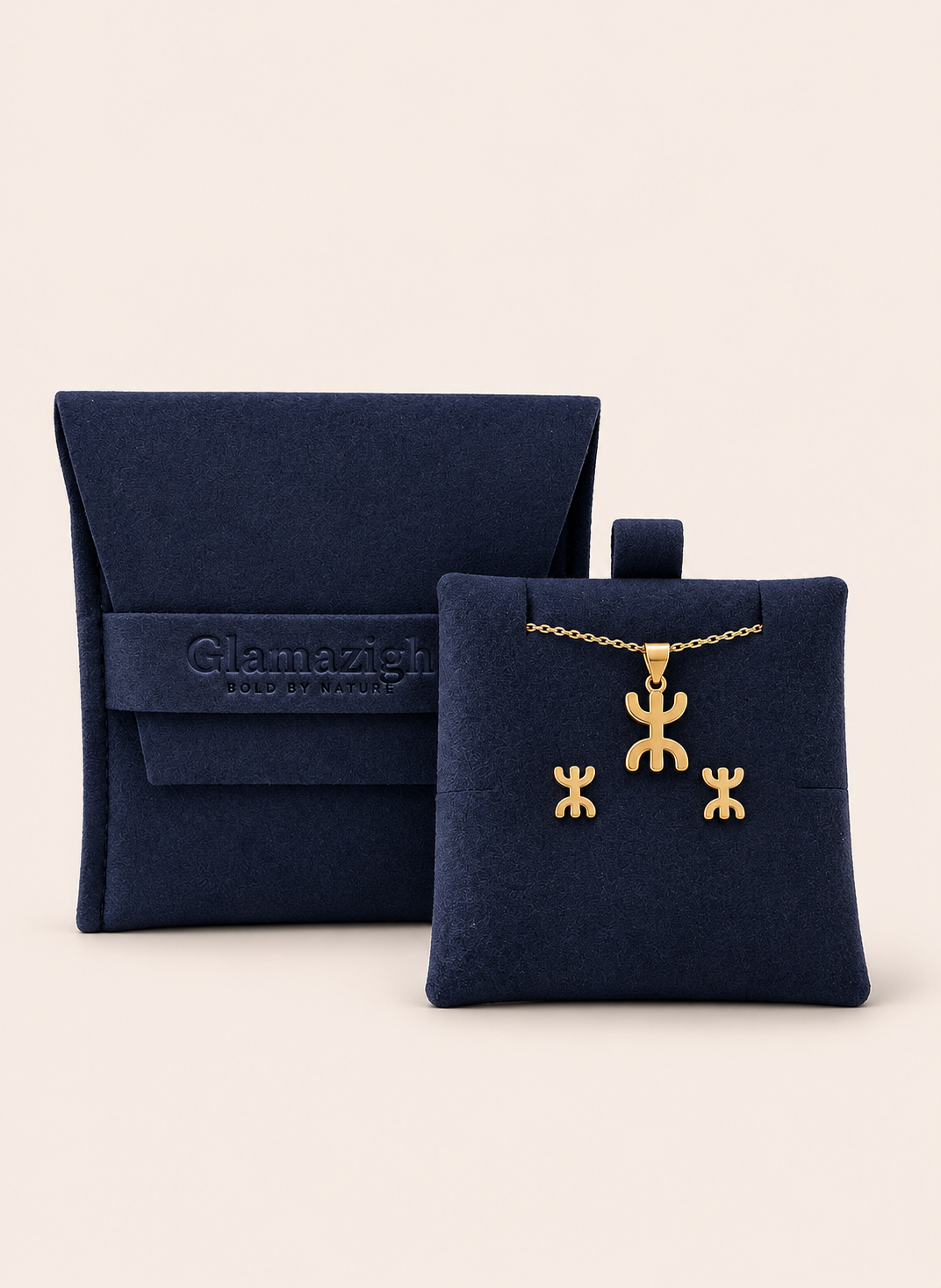
The Yaz ⵣ is the letter Z of the Tifinagh alphabet and the emblem of the Amazigh people, whose name is often translated as “Free Man”. Look closely: it draws a human figure standing tall, feet firmly rooted in the earth and arms raised to the sky, a picture of freedom, dignity and resilience. Today it stands at the centre of the Amazigh flag. Wearing the Yaz means wearing that spirit: a bold statement for those who walk their own path. Discover our Yaz jewellery.
The tazerzit is the Amazigh fibula: a decorative clasp, most often triangular, with a pin and a ring, traditionally worn in pairs to fasten women’s draped garments at the shoulders and often linked by an ornate chain. Its shape, size and decoration vary from one region and community to another: engraved, enamelled or set with coral and stones, each style tells where it comes from. Often handed down from mother to daughter, it became a symbol of feminine strength and transmission. Read the story of the fibula or shop our fibulas.
The Tuareg cross, often called the Southern Cross, is one of the most emblematic pieces of Tuareg jewellery. Its best-known form is the Agadez cross, named after the city in Niger, but there are many variants, each traditionally linked to a town or region of the Sahara. Crafted by Tuareg silversmiths, it is worn by both men and women. Its four branches are often read as the four directions, which is why it is traditionally offered to travellers, as a wish for protection on the road and a safe return. Today it remains a symbol of the journey, of new horizons and of the nomadic spirit. Discover our Tuareg jewellery.
Start with the meaning you want to pass on. The Yaz for someone who loves their freedom, the fibula to honour a strong woman in your life or to give strength to someone going through a challenge, the lozenge to celebrate femininity or a new chapter, the Hand of Fatima to wish serenity, and the Southern Cross for a traveller or a new beginning. Not sure? Our gift ideas are sorted by budget, from under €30, and a gift card lets them choose their own symbol.
Still have questions? Myriam, the founder, answers you personally on WhatsApp to help you choose.
Yes. “Amazigh” (plural Imazighen) is the name the people of North Africa use for themselves, while “Berber” is an older name given from outside. The symbols are the same: the Yaz, the fibula, the lozenge and the geometric motifs found in tattoos, rugs and jewellery from Morocco to Niger. At Glamazigh, we use the word Amazigh. Read our article on Amazigh culture.
